Step into the hushed galleries of the British Museum and you are immediately enveloped in veils of silk, soft light, and the murmuring soundscapes of ritual. Ancient India: Living Traditions is more than an exhibition of stone and bronze; it is an attempt to conjure the enduring vitality of Hinduism, Buddhism, and Jainism, from their ancient beginnings on the subcontinent to their flourishing across Asia.
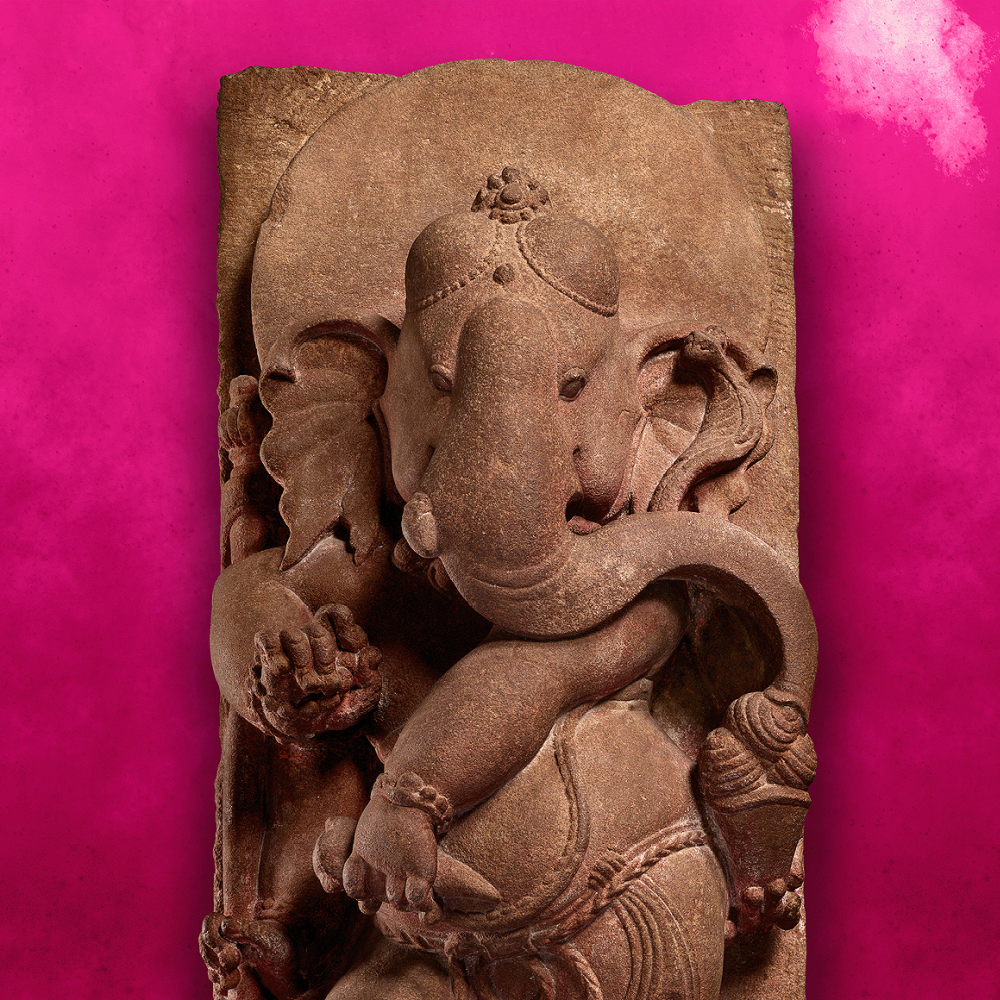
The scope is ambitious. Tracing sacred art from 200 BCE to 600 CE, the show reveals a revolution in visual culture: the shift from abstract, symbolic forms to radiant depictions of gods, teachers, and spirits rendered in human likeness. Nowhere is this transformation more compelling than in the Graeco-Roman–influenced images of the Buddha, whose serene features suggest the cosmopolitan exchanges of early Silk Road trade. Nearby, Jain masters shelter beneath sculpted hoods of protective serpents, while volcanic and sandstone forms of Ganesha (from Java and northern India) testify to the god’s extraordinary journey beyond India’s shores.

Nature spirits, too, abound. The exuberant yakshas and voluptuous yakshis, rooted in rural animist cults, stand as guardians of fertility and plenty, their curving bodies a reminder that in Indian religions, sexuality and sacredness are never far apart. Ardhanarisvara, the half-male, half-female form of Shiva, embodies a similar truth: the divine as a harmony of opposites. The phallic dimension of the lingam-yoni, so central to the Hindu imagination, is softened here, a curatorial hesitation in naming what is already obvious in stone.
The atmosphere is enchanting. Sculptures are displayed in the round, encouraging close engagement; films of modern practitioners in Britain remind us that these faiths are not relics, but living traditions. For many visitors, this immersive design, with its silks and shadows, will be the exhibition’s greatest achievement.

Yet the exhibit does not please as a narrative. While each religious tradition is represented, the galleries offer little sense of progression or interconnectedness. The explanatory texts, couched in dense academic language, often distance rather than invite – as if one were reading a descriptive catalogue. One leaves dazzled by the artistry, moved by the vitality of the forms, yet not much wiser about the spiritual and historical currents that shaped them.
Still, what lingers is the sense of India’s religions as life-affirming: sensual, rich in symbols of fertility, and cosmic balance. In an age when religious traditions are too-often framed as austere or divisive, this exhibition offers a view of faith as a celebration of life’s fullness. It is a vision worth contemplating: one that has shaped half the world.