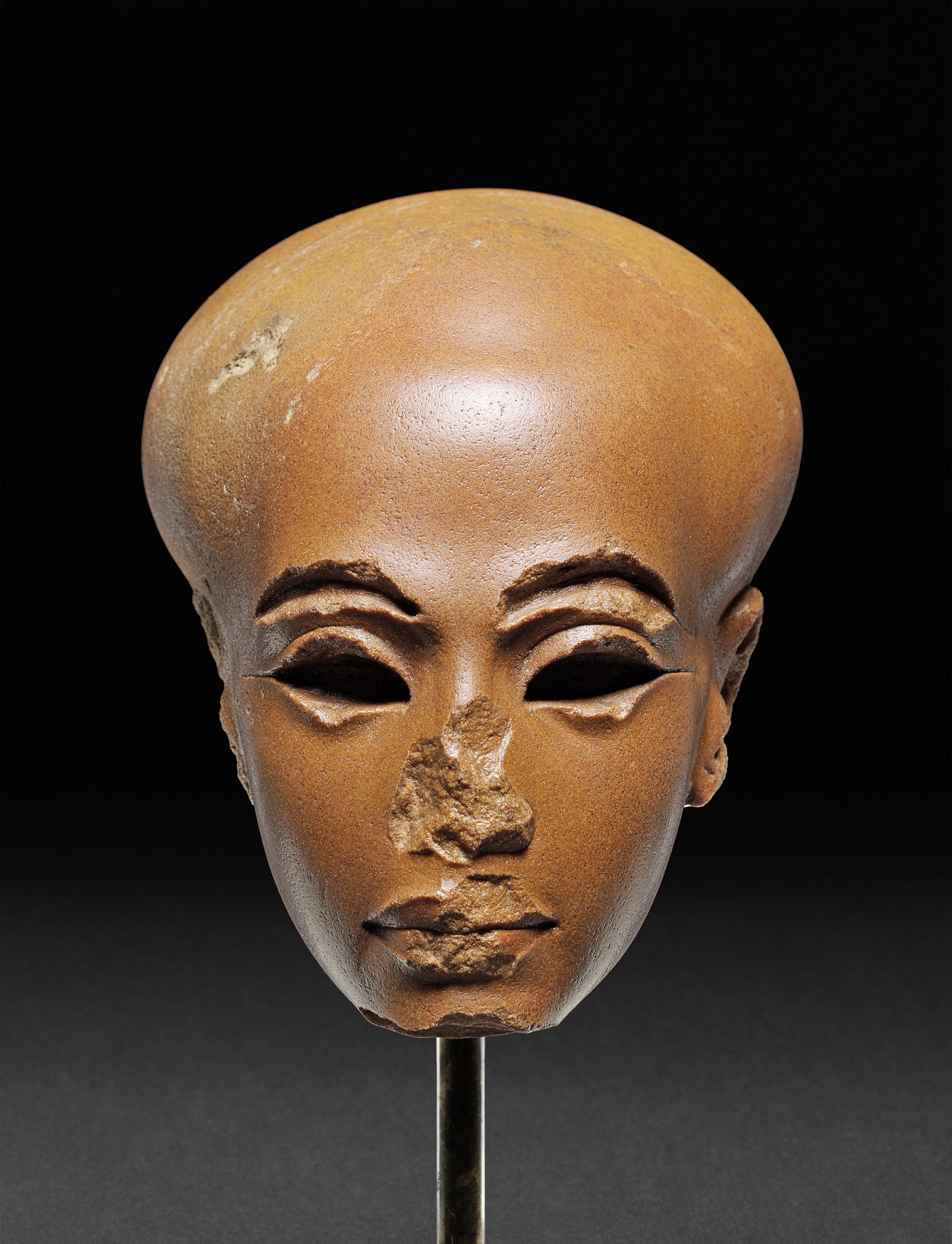
At the Fitzwilliam Museum, the past showed its working. And before its recent close (3rd October 2025 – 12th April 2026), Made in Ancient Egypt became one of the most tactile and human exhibitions to hit the UK in years. This wasn’t another parade of gods and gilded afterlives. Instead, it slipped behind the spectacle and into the workshop, complete with dust, repetition, innovation, and the people. Or rather, the makers.

Ancient Egypt was here reimagined not as a monolithic civilisation of perfection, but as a living, breathing network of craftspeople: sculptors scoring gridlines into stone, weavers counting threads into the thousands, metalworkers experimenting at the edge of heat and failure. The result was an exhibit that felt less like a history lesson and more like stepping into an ancient studio mid-process.
The star, in many ways, wasn’t a pharaoh but a coffin. The cartonnage mummy-case of Nakhtefmut (an almost holy relic of layered linen, glue, pigment, and gold) was both object and evidence. You could reverse-engineer it with your eyes to see the hands that soaked the fabric, the precision of the carved surface, the careful application of gold leaf that still catches light millennia later. It’s the kind of object that collapses time, with a technique that feels contemporary.
And that’s where Made in Ancient Egypt excelled, by allowing you to draw unsettling parallels between then and now. Take the ostraca (flakes of limestone used as notepads). Scribbled across them are complaints, delivery notes, and one particularly relatable log of missed workdays: a funeral, an illness, someone called Panebu “bitten” by something unspecified. Replace the medium, and it’s WhatsApp messages and office admin, and, of course, entirely, recognisably human.
Elsewhere, a fragment reading like an urgent order and complete with a sketch indicating size might be the oldest recorded window installation request. You start to realise that whilst the tools may change the rhythms of work don’t.
The exhibition design leaned into this material intimacy. Canvas segments of wall evoked mummy wrappings; woven textures echoed papyrus production; hieroglyphs marked each section (for example, jnr for “stone”. It was immersive without being theatrical.
And then there were moments of pure aesthetic arrest. A fringed linen dress, over 4500 years old, hung fragile and suspended. A girdle woven for Rameses III revealed staggering technical mastery: thousands of threads, months of labour, patterns encoding protection and power through rows of tiny ankhs in some of the finest Egyptian weaving we’ve ever seen. Nearby, faience tiles in electric blue and gold hummed with colour as vibrant as any contemporary design object.

But beauty was never detached from process. A large ceramic vessel revealed its own making of being flipped, layered, and built in stages. A shrine bore a near-invisible maker’s signature, only legible under angled light, alongside chisel marks mapping each decision. These were conversations between intention and material.
Even the unfinished pieces offered rare access. Ink guidelines, incomplete inlays, and abandoned polish where you could see hesitation and thought.

In those details, something radical emerged quite unexpectedly: individuality. Not in the modern sense of artistic ego, but in the traces of fingerprints pressed into varnish, a quick sketch of a stonemason’s profile, a handwritten complaint from a textile supervisor struggling with her team. These fragments resist the anonymity we impose on ancient worlds.
They remind us that behind every “timeless” object is time, wrought in the labour it took to produce it. This exhibition rewires how you look at such things. Long after leaving, you stop seeing ancient Egyptian objects as static icons. Instead, you see systems, recording workmanship. And perhaps most strikingly, you see how little has changed.